
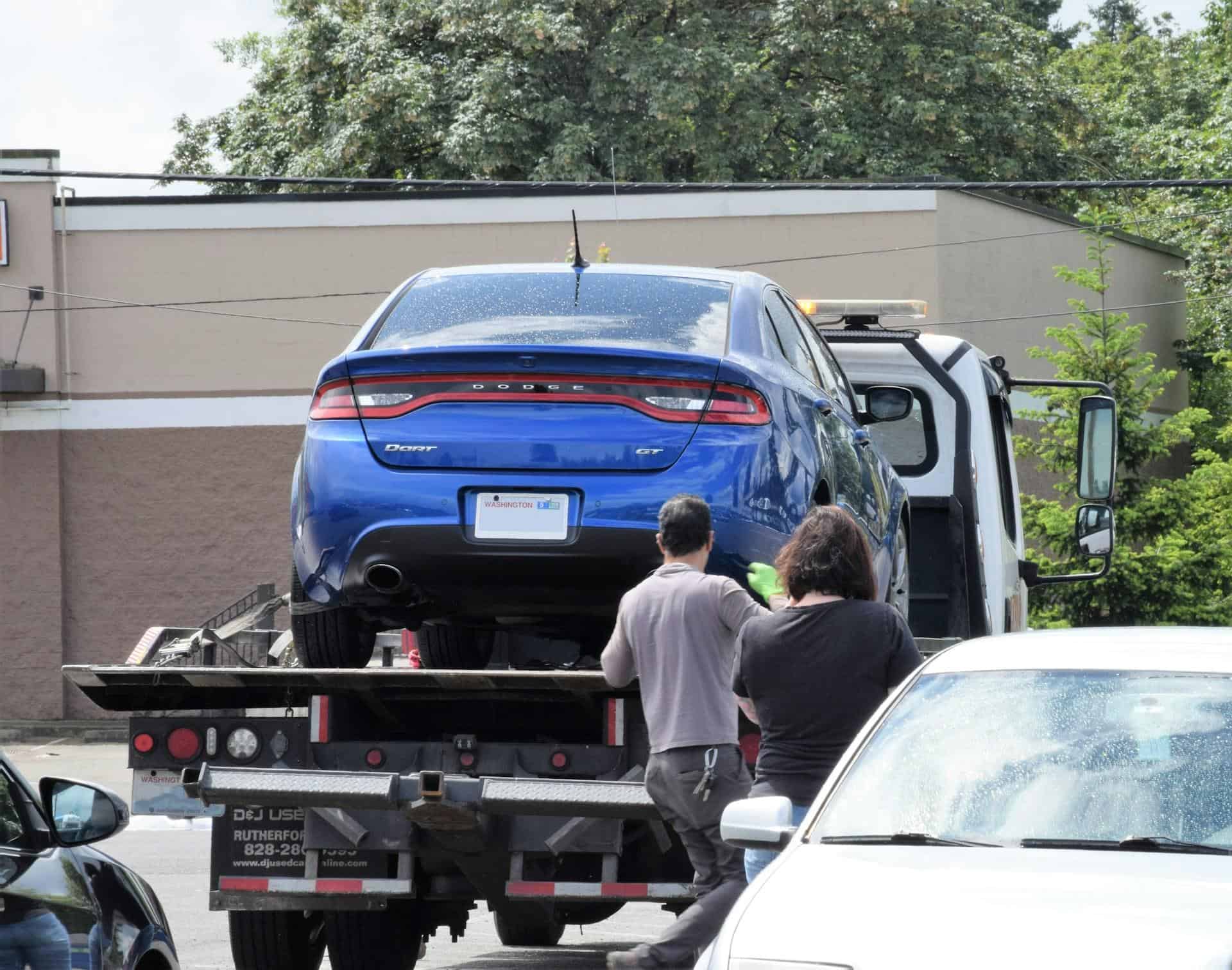
You can’t choose when your car breaks down. But with the right support, you can prepare for breakdowns before they happen. When you’re stuck on the side of the 101, you’re already stressed. You should be able to call for help knowing you’re covered when transporting your vehicle.
This guide is designed for Los Angeles drivers who want to understand how towing insurance works, what it covers, and how it can protect you from unexpected roadside expenses.
If you drive in Los Angeles, towing insurance is something worth understanding before you really need it. This guide breaks down what it is, what it does and doesn’t cover, and whether it makes sense to add it to your policy.
What Is Towing Insurance?
Towing insurance, officially called towing and labor cost coverage, is an optional add-on to your car insurance policy. This add-on helps cover expenses related to roadside breakdowns, such as towing and labor charges. It also helps pay for the cost of towing your vehicle and any labor done on the spot when your car breaks down and cannot be driven. Towing coverage can be added as an endorsement to auto insurance policies, providing reimbursement for towing expenses when a vehicle is disabled due to non-collision incidents.
Towing insurance is not is not a replacement for your regular car insurance. For most car ownership needs, standard insurance coverage handles accidents and other covered losses, but not routine roadside problems. Think of it more like a backup plan for a roadside emergency when you need assistance for issues that standard policies do not cover. It’ll help if you get a dead battery on a hot day in the Valley, flat tires on the 10 freeway, or a breakdown that leaves you stranded far from the nearest repair shop.
Does Regular Car Insurance Cover Towing?
This is one of the biggest misconceptions out there. A lot of drivers assume that if they have “full coverage,” towing is included. It usually is not.
Full coverage refers to a combination of liability, collision, and comprehensive insurance. Standard auto insurance policies do not cover routine breakdowns unless you add a Towing and Labor rider or an Emergency Roadside Service rider. Here is a quick breakdown of what each type does in most insurance policies:
- Collision coverage pays for damage to your car after an accident. Some policies include towing to a repair shop as part of this, but it is not guaranteed.
- Comprehensive coverage handles non-collision damage like theft, fire, or a fallen tree. Whether towing is included depends on your specific policy, so it’s worth checking.
- Roadside assistance coverage is an optional add-on that many insurers offer. This is what actually covers towing in most cases.
To get towing covered, you generally need to add a towing and labor endorsement or roadside assistance plan specifically to your policy. If you are not sure whether you have it, check your policy documents or contact your insurance provider and ask directly.
What Does Towing Insurance Cover?
Coverage options vary by insurer and plan, but most towing and labor cost coverage includes help when your vehicle is inoperable due to issues like mechanical breakdowns, flat tires, or running out of fuel. Specific covered services would likely include:
- Towing to the nearest repair shop or one of your choice, up to a certain distance
- Jump starts when your battery dies
- Flat tire assistance, including installing your spare tire
- Fuel delivery if you run out of gas
- Lockout service if you lock your keys inside the car
- Winching if your vehicle is stuck in mud, sand, or a ditch, depending on whether the tow truck can safely gain access to it
- On-site labor costs for roadside repairs
One important note: this coverage pays labor charges for roadside help, not the cost of parts afterward. So if a technician comes out and fixes something on the spot, you still cover any replacement parts that were needed.
Knowing the limits of your coverage is just as important as knowing the benefits, and exclusions vary across policies. Common exclusions include:
- Neglect (mechanical failures caused by poor maintenance are generally excluded)
- Off-road incidents (coverage typically does not apply if your vehicle gets stuck off-road or in extreme conditions)
- Other people’s vehicles (coverage usually follows your insured vehicle, not other vehicles you may be driving)
- Motorcycles and RVs (standard towing policies may not extend to specialized vehicles unless you have specific coverage)
- Impound and storage fees (insurance does not cover fees for parking violations or impound)
- Long-distance towing beyond your plan’s mileage cap (basic plans might only cover 5 to 15 miles; premium plans can go up to 100 miles)
Finally, towing insurance will not cover parking fees. This is a big one in LA. If your car is towed for a parking violation, expired registration, or a street sweeping ticket, no car insurance policy in the world will cover those fees. And in Los Angeles, those fees can pile up fast if you do not act quickly.
Is Towing Free If You Have Coverage?
Not always. Reimbursement depends on your insurance provider and the details of your plan.
Some insurers pay the towing company directly when you use an in-network provider. That means little to no out-of-pocket cost at the time of the tow. If you choose your own tow truck services instead of the insurer’s preferred provider, you usually have to pay upfront, keep your receipt, and file a claim for reimbursement afterward.
Without any coverage, towing costs in the U.S. average around $109, with rates ranging from $2.50 to $7.00 per mile. In a city as spread out as Los Angeles, where a tow might easily cover 20 miles, those unexpected expenses can add up to $150 or more before you even get to the repair shop. However, there are some options for free or reduced towing costs.
Towing Insurance vs. Roadside Assistance: What Is the Difference?
These two terms get used interchangeably, but they are two different coverage options.
Towing and labor coverage plugs directly into your existing auto insurance policy. The catch is that using it counts as an insurance claim, which could nudge your rates up at renewal. The tradeoff is the price: most drivers pay just $10 to $50 per year to have it.
Roadside assistance can be either an add-on through your insurer or a standalone service like AAA. When it is a standalone membership, it can also offer broader emergency assistance for roadside issues, and using it does not trigger an insurance claim or impact your premium. AAA alone handled over 27 million roadside calls across the U.S. in 2024.
| Towing & Labor Coverage | Roadside Assistance Plan | |
|---|---|---|
| Tied to your insurance? | Yes | Not always |
| Can raise your premium? | Yes | No (if standalone) |
| Follows the car or the driver? | The car | The driver |
| Typical cost | $10-$50/year | Varies, often higher |
| Extra perks? | Rarely | Often (AAA, etc.) |
| One more thing worth checking: some credit cards include roadside assistance as a cardholder benefit. Before you add anything new, evaluate all available coverage options, then log into your credit card account or call the number on the back of your card to find out what you already have. | ||
How Much Does Towing Insurance Cost?
Towing coverage is one of the most affordable things many drivers can add to their car insurance policy. Most drivers pay between $10 and $50 per year, depending on their insurer, location, and the level of coverage they choose.
For Los Angeles drivers, it is worth noting that the cost of an actual tow tends to run higher than national averages because of the distances involved and general demand in a dense metro area. Paying a few extra dollars a month for coverage makes a lot more sense when it can help reduce towing-related expenses over time.
Coverage Limits to Watch For
Every towing insurance plan has limits. Before you assume you are fully covered, make sure you understand that mileage is only one of several other factors that affect what a tow will cost:
- Mileage caps. Basic plans often cover only 5 to 15 miles of towing. If your breakdown requires a longer haul, you may owe the towing company for the extra distance, and the final price can also depend on location, vehicle type, and time of day.
- Annual service call limits. Some policies cap you at three or four calls per year. Once you hit that limit, any additional tows come out of your pocket.
- Dollar amount limits. Some policies set a maximum reimbursement per incident regardless of what the tow actually costs.
Ask your insurer specifically about these limits when you add coverage. It takes 60 seconds and saves a lot of confusion later.
How to Add Towing Coverage to Your Policy
Adding towing coverage is usually simple. Most insurance companies let you do it with a phone call or through your online account. Before you do, ask yourself a few questions:
- How much do you drive? If you are putting a lot of miles on your car, you are more likely to need a tow at some point.
- How old is your car? Older vehicles break down more often. If your car has over 100,000 miles on it, towing coverage is a genuinely smart investment.
- Do you already have roadside coverage? Check your credit cards and any memberships before you pay for something twice.
- What are the coverage limits? Ask about mileage caps and annual service call limits before you sign up.
If your current insurer does not offer towing coverage, standalone roadside assistance plans and auto club memberships like AAA are solid alternatives.
Is Towing Insurance Worth It for LA Drivers?
For most people driving in Los Angeles, towing coverage can be a practical safety net.
The cost is low. The potential savings are real. And a breakdown on a crowded freeway in Southern California is stressful enough without wondering how you are going to pay for the tow.
The drivers who get the most out of towing insurance tend to be:
- People with older vehicles that are more likely to have mechanical problems
- Drivers who regularly cover long distances or rely on older cars
- Individuals who do not already have a standalone roadside assistance plan
If you already have AAA or your credit card includes roadside benefits, adding a towing endorsement to your policy might be redundant. In that case, compare your existing insurance coverage carefully before adding potential duplicates.
What to Do When You Actually Need a Tow
When you need a tow, the safest move is to call your insurance company before you call a tow truck. They can tell you which companies are in-network and walk you through the process so you are not stuck with a surprise bill.
When your car breaks down in LA, here is what to do:
- Get to safety first. Turn on your hazard lights and move away from traffic if you can do so safely.
- Call your insurer before calling a tow company. Use the number on your insurance card or app. They can connect you with an in-network provider and walk you through the process.
- Confirm your coverage on the call. Ask about mileage limits, what services are covered, and whether you will need to pay upfront.
- Get documentation. Ask for the tow truck driver’s name, company name, and a receipt. You will need this for any reimbursement claim.
- File your claim quickly. Submit your receipts and documentation to your insurer as soon as possible.
Quick Facts: Towing Insurance at a Glance
- Towing coverage typically costs $10 to $50 per year as a policy add-on
- The average U.S. tow without coverage costs around $100
- Standard full coverage car insurance does not automatically include towing
- Basic plans often cover only 5 to 15 miles; premium plans can cover up to 100 miles
- Impound fees for parking or traffic violations are never covered by any insurance
- Using your towing coverage counts as a claim and could affect your premium at renewal
Need a Tow in Los Angeles Right Now?
Whether you have towing insurance or not, if you are stuck on the side of the road in LA, 878 Auto Tow is ready to help 24 hours a day.
We are local, we are fast, and we know the roads of Los Angeles better than anyone. No waiting on hold with a national dispatch center, no uncertainty about when someone will actually show up.
Call us directly at 878-AUTO-TOW and we will get you moving.
You can also visit us at 878autotow.com to learn more about our towing services across the Los Angeles area.
